
Essay / July 28, 2026
The Next Great Collective Bargaining Opportunity: Why Every Labor Union Must Become a Data Union
Artificial intelligence has created organized labor's next great bargaining opportunity—but only if we recognize what workers have been producing all along.
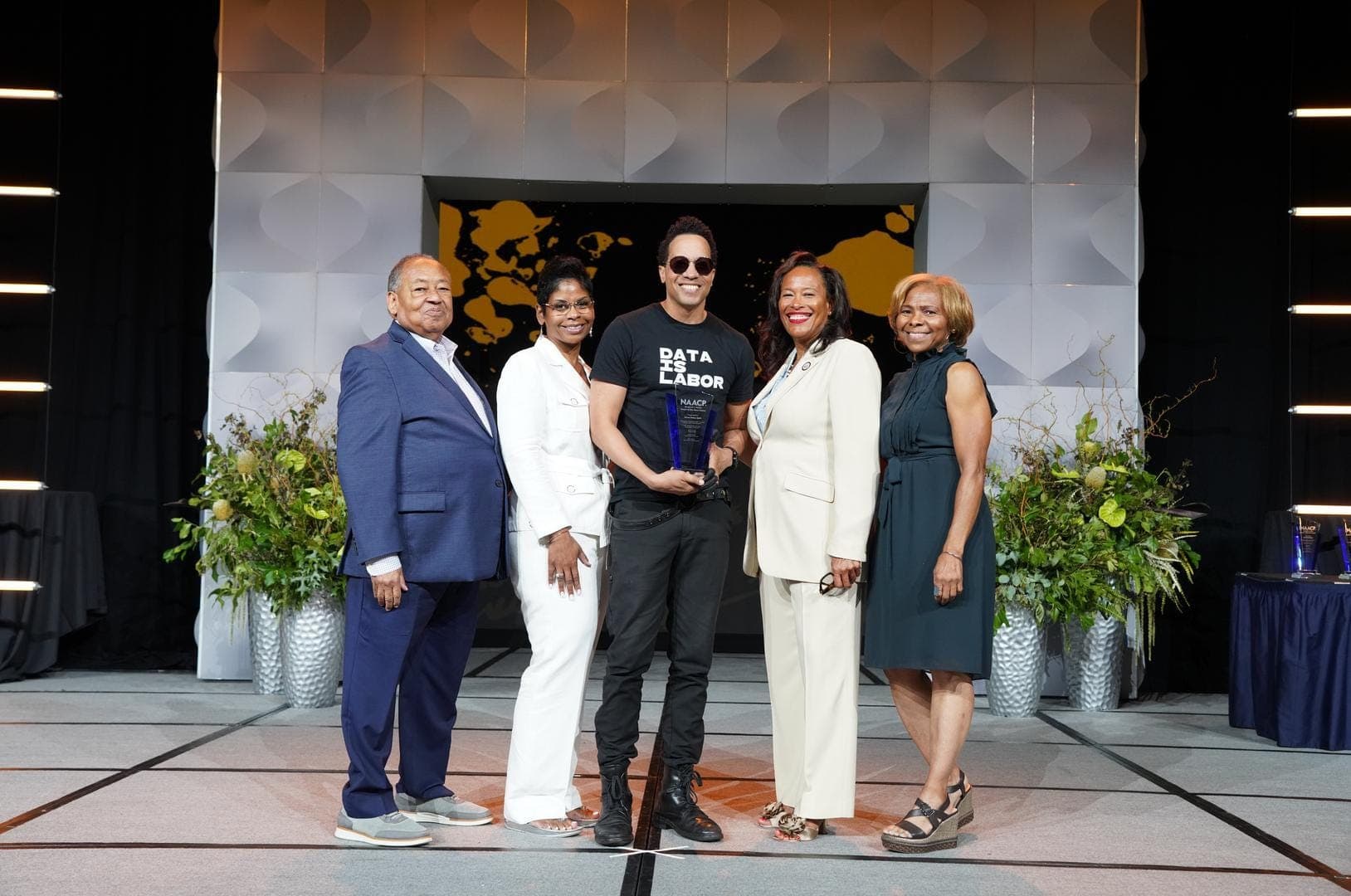
Last week, I stood before hundreds of labor leaders in Chicago to accept the NAACP National Labor Committee ’s Keeper of the Flame Award, named in honor of former President and First Black Commissioner of the Federal Communications Commission (FCC) Benjamin L. Hooks. I told them that the foundation Hooks has allowed us to turn all of the data that stems from communications into a type of property that both creates labor and allows us the opportunity to collective bargain for its value. As I stepped off the stage, something unexpected happened.
People didn’t come over to congratulate me.
They came with questions.
“Can our union do this?”
“Can we bargain over AI?”
“How do we make sure our members aren’t giving away everything they’ve taught these machines?”
Those conversations stayed with me long after the luncheon ended.
For more than twenty years, I have argued something that many economists, technologists, and even labor leaders once dismissed as impossible:
Data is labor.
When I first began making that argument, Facebook was still a college website. Smartphones had barely entered our pockets. Artificial intelligence belonged mostly to science fiction. Privacy debates focused almost entirely on surveillance and civil liberties. Very few people were asking who was creating the information that would eventually power an entirely new economy.
Today, no serious person can deny that information has extraordinary economic value.
The largest technology companies in history were built upon it.